

Cutting-edge radar technologies provide unparalleled precision in target detection and surveillance across land, air, and sea operations. Advanced tracking solutions facilitate critical decision-making by delivering real-time situational awareness in complex electronic environments.

Early Warning Radars (EWR)
These systems provide long-range 3D detection for early identification of ballistic missiles and aerial threats at strategic distances. They serve as the primary sensor layer within national integrated air defense networks to ensure maximum reaction time.

Low-Altitude Air Defense Radars
Specialized for the detection of low-flying targets such as cruise missiles and unmanned aerial vehicles, these radars provide high-resolution tracking in complex terrain. They are essential for filling gaps in radar coverage and protecting critical infrastructure against sudden low-altitude incursions.

Multi-Functional Fire Control Radars
These high-precision systems are designed for target tracking and the mid-course guidance of surface-to-air missile systems. They provide rapid target acquisition and high update rates to ensure a high probability of intercept against maneuvering threats.

3D Naval Surveillance Radars
These radars provide simultaneous volume search and tracking of air and surface targets for modern naval vessels. They offer high resistance to sea clutter and electronic countermeasures, ensuring superior situational awareness in diverse maritime environments.

Low Probability of Intercept Radars
Utilizing sophisticated waveform management, these radars detect targets while remaining virtually invisible to enemy electronic support measures. They enable tactical surprise and increase platform survivability during covert maritime operations.

Fire Control Naval Radars
These systems provide extremely accurate tracking data for the direction of naval gunnery and shipborne defensive weaponry. They are engineered to maintain a continuous lock on high-speed, sea-skimming threats to ensure effective point defense.
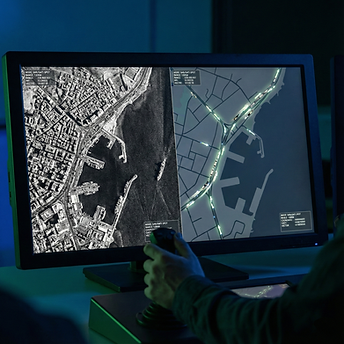
Synthetic Aperture Radar (SAR/GMTI)
SAR/GMTI systems provide high-resolution ground mapping and movement detection regardless of weather or light conditions. They are critical for persistent surveillance and reconnaissance missions on both manned and unmanned aerial platforms.

Active Electronically Scanned Array Radars (AESA)
AESA technology allows for nearly instantaneous beam steering and multi-mode operation, significantly enhancing multi-target engagement capabilities. These radars provide high gain and advanced electronic counter-countermeasures for modern fighter jets and advanced UAVs.

Obstacle Avoidance & Weather Radars
Designed for flight safety, these systems detect terrain obstacles and hazardous weather patterns in real-time. They enable low-altitude tactical flight and autonomous navigation for aerial platforms in restricted visibility conditions.

Weapon Locating Radars
These radars instantly detect incoming mortar, artillery, and rocket fire to accurately calculate the weapon's point of origin. They are vital for providing rapid counter-battery target data and protecting personnel in active conflict zones.

Ground Surveillance Radars (GSR)
GSR systems provide high-sensitivity detection of human movement and vehicle traffic at significant ranges for border and perimeter security. They are capable of operating in all-weather conditions to provide persistent monitoring of sensitive land sectors.

Coastal Surveillance Radars
Optimized for the detection of small, fast-moving surface vessels and swimmers, these radars ensure complete maritime border control. They are designed to differentiate between legitimate sea traffic and illegal incursions in crowded coastal environments.

Drone Detection Radars
These specialized high-resolution radars are engineered to detect and track mini and micro-UAVs with extremely small radar cross-sections. They utilize advanced algorithms to distinguish drones from biological clutter, such as birds, in complex urban or rural landscapes.